Portrait drawing
Teaching myself to draw - based on a book and a deep desire to feel like I’m good at stuff.
After a year… the ‘drew’ part of Shot & Drew finally makes sense.
I'm getting back into a good routine of uploading content, so hopefully, we won't see too many more multi-month hiatuses from the blog. Let's talk about something that I hold near and dear to my heart: Drawing.
I've always liked to draw, but for most of my life, I wasn't very good. I had fun, but the final product looked like doo-doo.
I always used it as a productive feeling way to procrastinate chores or homework, especially in university. When I knew I had to do dishes or read an assigned chapter, I would doodle instead. I started pretty small. I would draw characters from animated shows and the like. I remember the first time I was ever really proud of a drawing was this Calvin and Hobbes doodle I made in high school. It actually looked like the characters, and that got me hooked.
It's a great feeling to recreate something, and the process itself is generally really relaxing and meditative. From there, I moved on to more complex (but still animated) drawings, Avatar the Last Airbender, Fullmetal Alchemist, Deathnote etc. (incidentally the same time I was getting into anime. Probably unrelated)
After a little while, I got more interested in being able to recreate things more realistically. It's one thing to make something cool that looks like an animation, but it's quite another to create something that looks like it does in real life. It didn't start as a desire to draw realistic portraits. I know that much. I just wanted to spend the time to get better at drawing and create things I could be proud of.
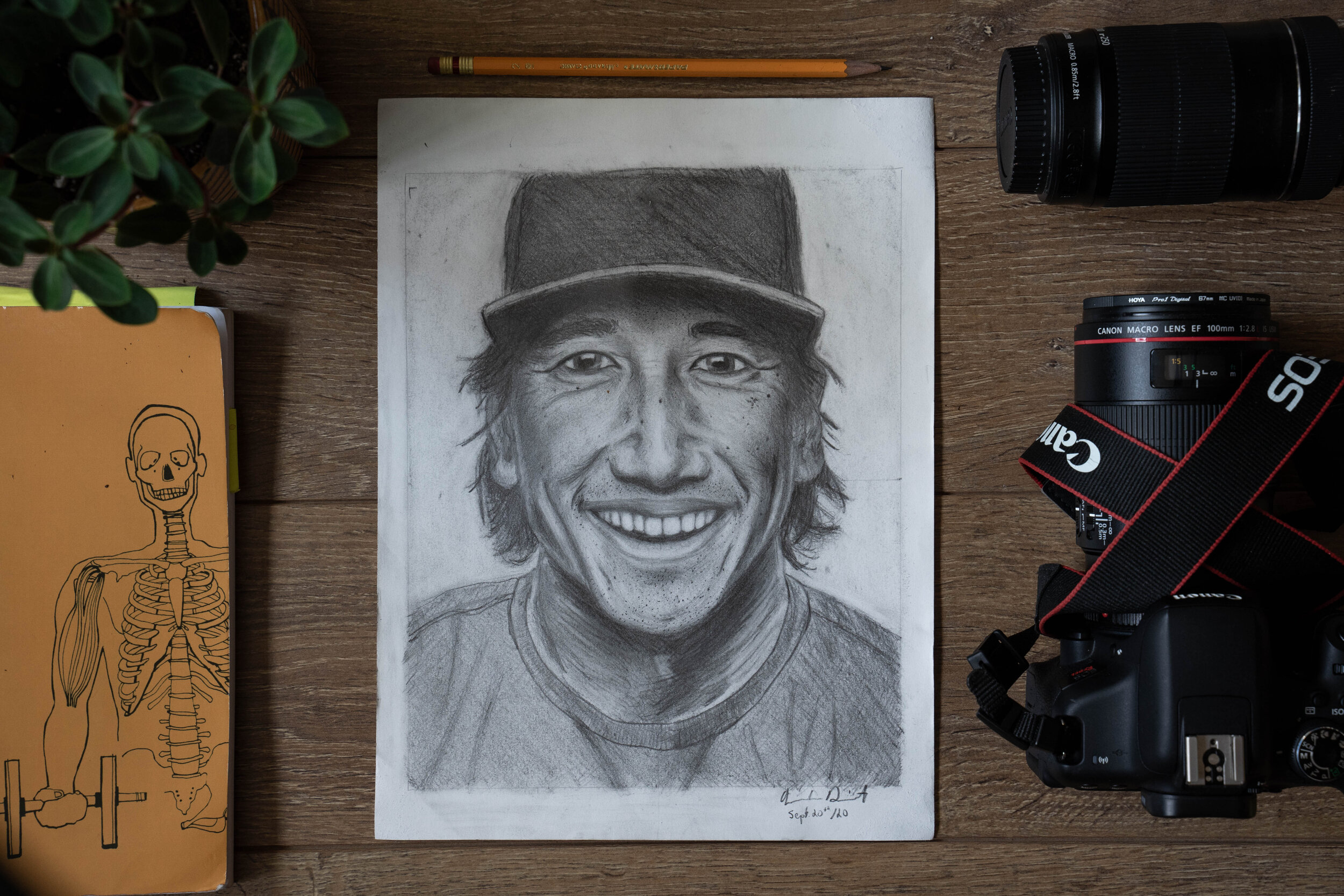
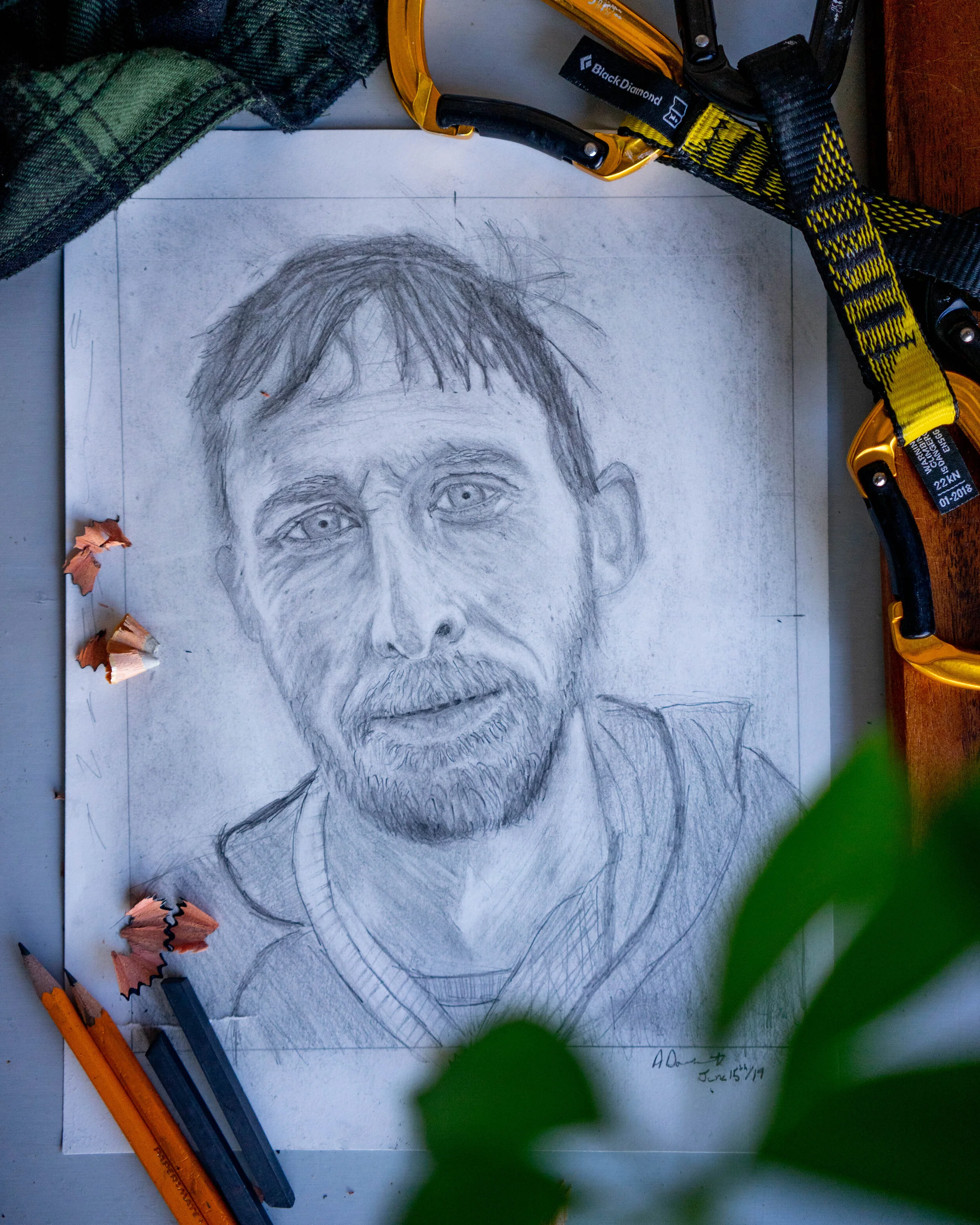
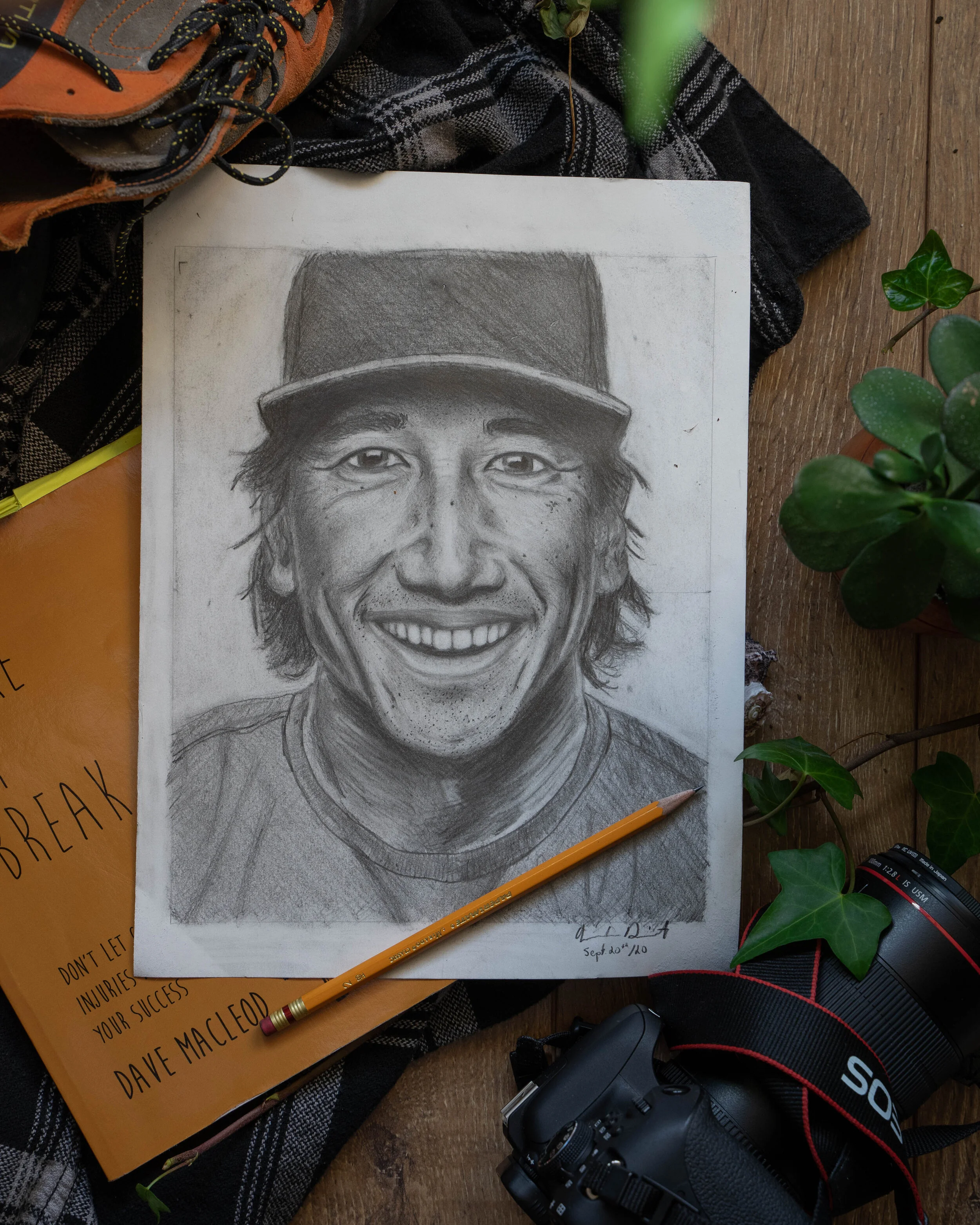
My best work to date — Jimmy’s Chin 2020. Also this picture of it slaps.
So after graduating from UNI and going starting a deeply uninspiring job (first cutting grass and then working in a warehouse), I gravitated toward drawing more seriously. It gave me a creative outlet to challenge myself and helped to make me feel like I wasn't wasting my time at these jobs.
Then, the tome. The book of all books. The drawing bible. The only companion text you'll ever need if you want to become a confident and competent artist. Drawing on the Right Side of the Brain by Betty Edwards. This book is the be-all and end-all of drawing books. I give Betty Edwards full credit for teaching me how to draw well.
I had the passion and the interest in getting better, but this book perfectly lays out the framework to grow. I'll give you a quick run-down on the principles of the book. It isn't one of those "draw a circle, then draw another circle, now draw the rest of the owl" books; it teaches you how to approach drawing from an analytical and logical angle.
It takes the mysterious 'creative spark' or 'innate talent' idea and throws it out the window and breaks down this subjective expression into a manageable series of lessons that build a foundation of understanding. The book gives you the tools and framework to think like an artist and, more importantly, to see like an artist.
Notice the huge difference between before the course (left) and after the course (right)
The barebones explanation is this:
It's based on the idea that your left and right hemispheres of the brain are better suited for different specific tasks. The left side is traditionally thought of as the creative, impulsive, emotional side of the brain. (Commonly thought of as where creativity and artistic ability lies) While the Right side of the brain is the more logical, pattern-focused and problem-solving hemisphere.
The book's central premise is that using the right side of the brain (the logical, analytical, pattern recognition side) allows you to exceed the preconceived limits to your potential.
Basically, the book teaches you to look at a subject not as an entire, complete thing but as a collection of shapes, light, texture and lines. Instead of drawing a dog, or John Cena, you simply recreate those shapes and patterns in relation to one another. Eventually, you get John Cena without actually drawing him. There are lessons on these ideas. They start with a beautifully written, clear, and understandable explanation followed by several activities meant to break down the concepts while building your confidence.
The book's main drive isn't about physical technique, i.e. types of lines, pen holding, medium, composition, but rather the mental side of things, especially confidence. I remember starting this book being really skeptical. The first task is, without any instruction, to draw your hand, your self-portrait and a close friend from memory. They are supposed to be bad. And all of mine were. Check 'em out. The book asks you to sign and date all your work so you can look back on it and be impressed with the progress.
The lessons taught in this book genuinely work. I don't want to spoil them or butcher the explanations. From starting this book to finishing it a few months later, my confidence and ability went through the roof. Like, look at the side-by-side of these two self-portraits.
There have been 5 different iterations of this book because Betty Edwards was an active art teacher. She kept learning new things and adding them to the book. She's basically the best. The book is littered with incredible images and pictures to illustrate techniques, and they're literally illustrations. Hahaha, comedy.
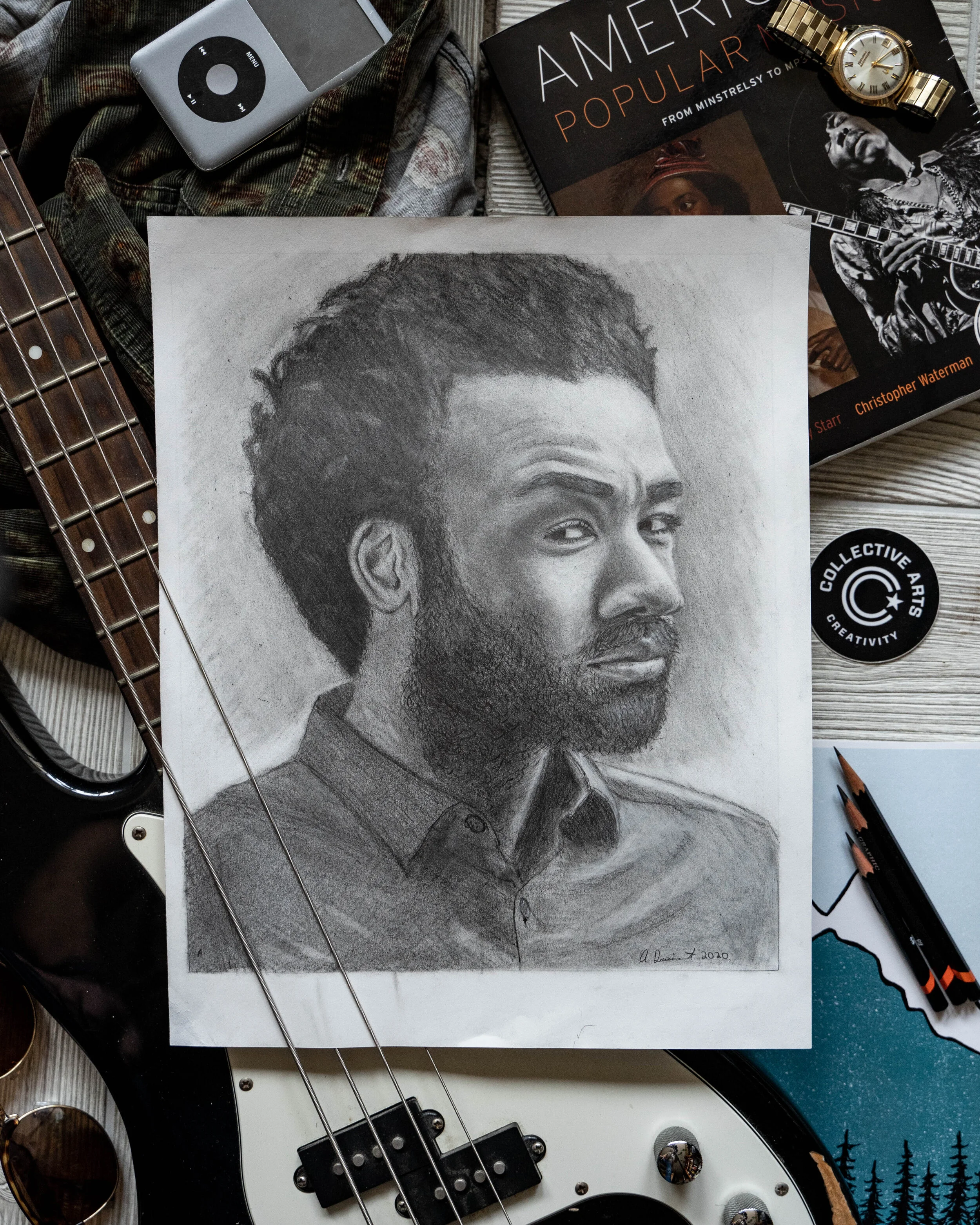
I’ve been slowly building up my confidence with portraits. I am definitely learning more with each new project. A fun side effect is I’m also getting much faster. The first few portraits took months, partially because of laziness, but also because I obsessed over tiny details. I’ve learned to go with the flow a bit more. The more faces I draw the more I’m able to work past tricky spots. I’m also trying to use new techniques or try new things with each portrait, my most recent was a portrait of Donald Glover which is in a ⅔ profile which is the trickiest to draw. Because you can see the face from an angle, all the elements are different sizes and you have to take perspective into account much more than with a full profile or a full-frontal (hehe) portrait.
My next project is a really exciting one, it’s another ⅔ profile but this time with a BODY. Woah! It’s still in the early stages but I’m really excited to try it out. I’ve literally only been drawing faces for the last year so arms and shoulders will be very exciting! Stay tuned for the inevitable super extra flat-lay photo of that in about 2 months. I said I was getting faster, that doesn’t mean I’m fast.
Enjoy a slideshow of my portraits to date below!
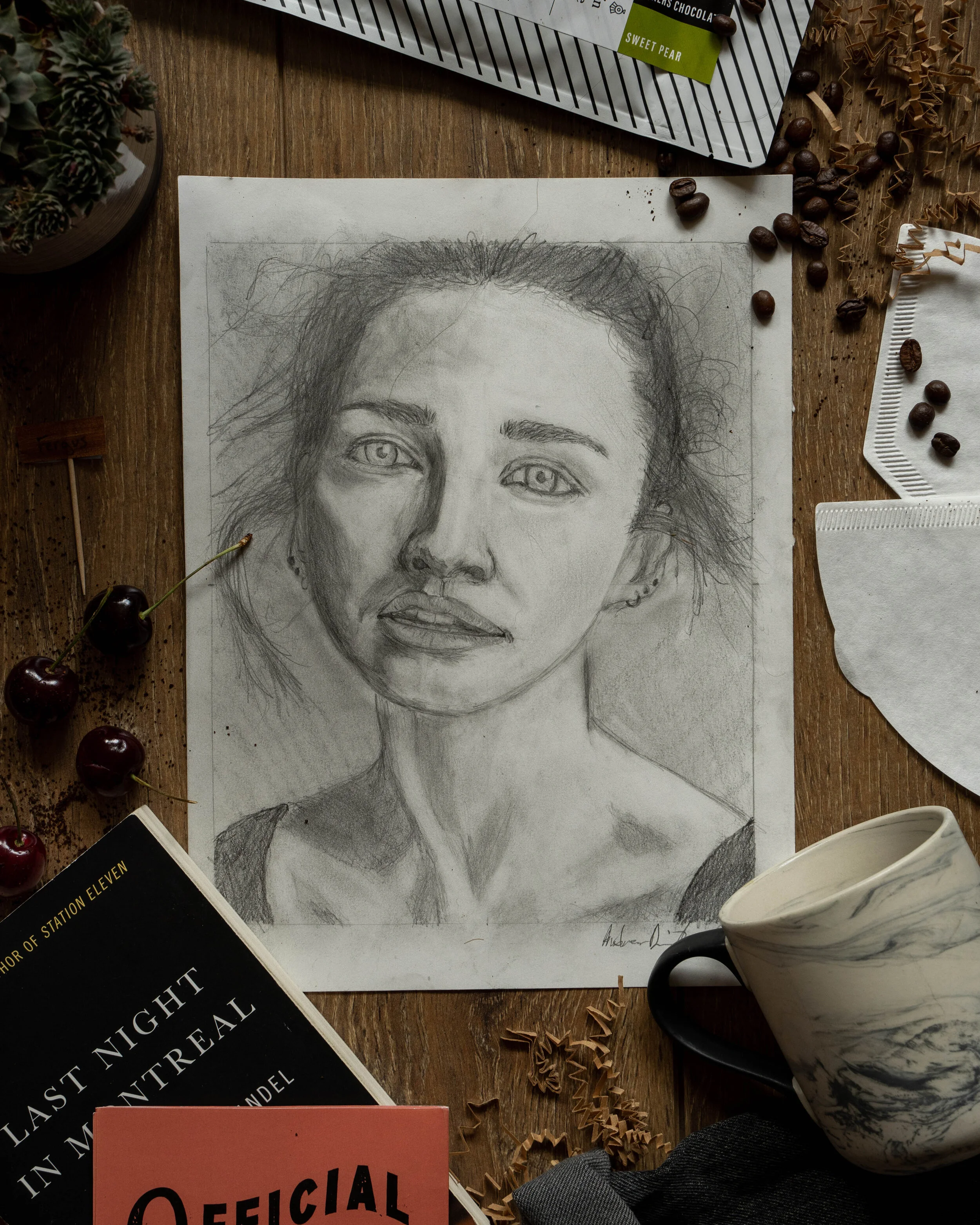
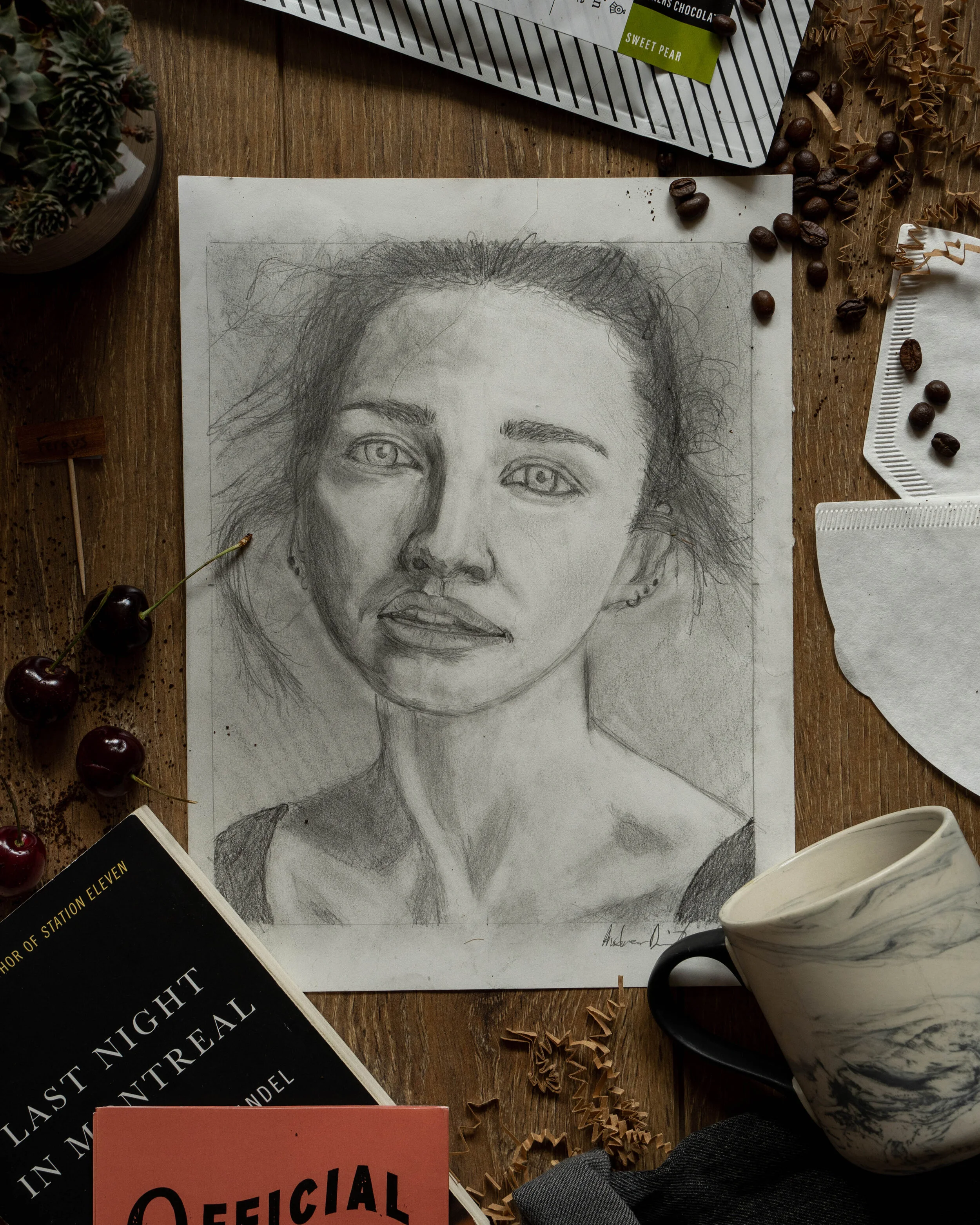
New Photo of an old portrait. My first completed one after my self-portrait. Took forever but I love how it turned out.
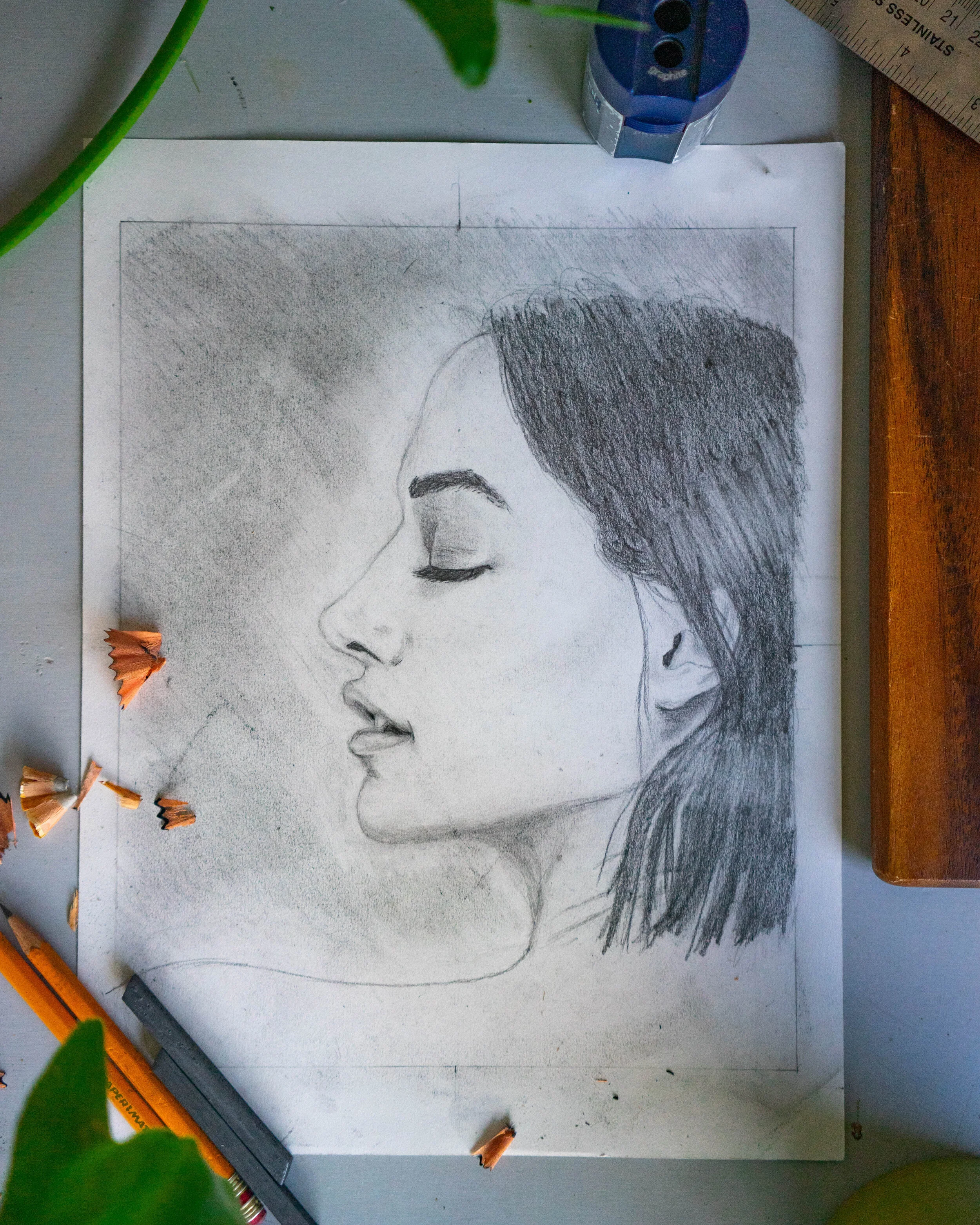
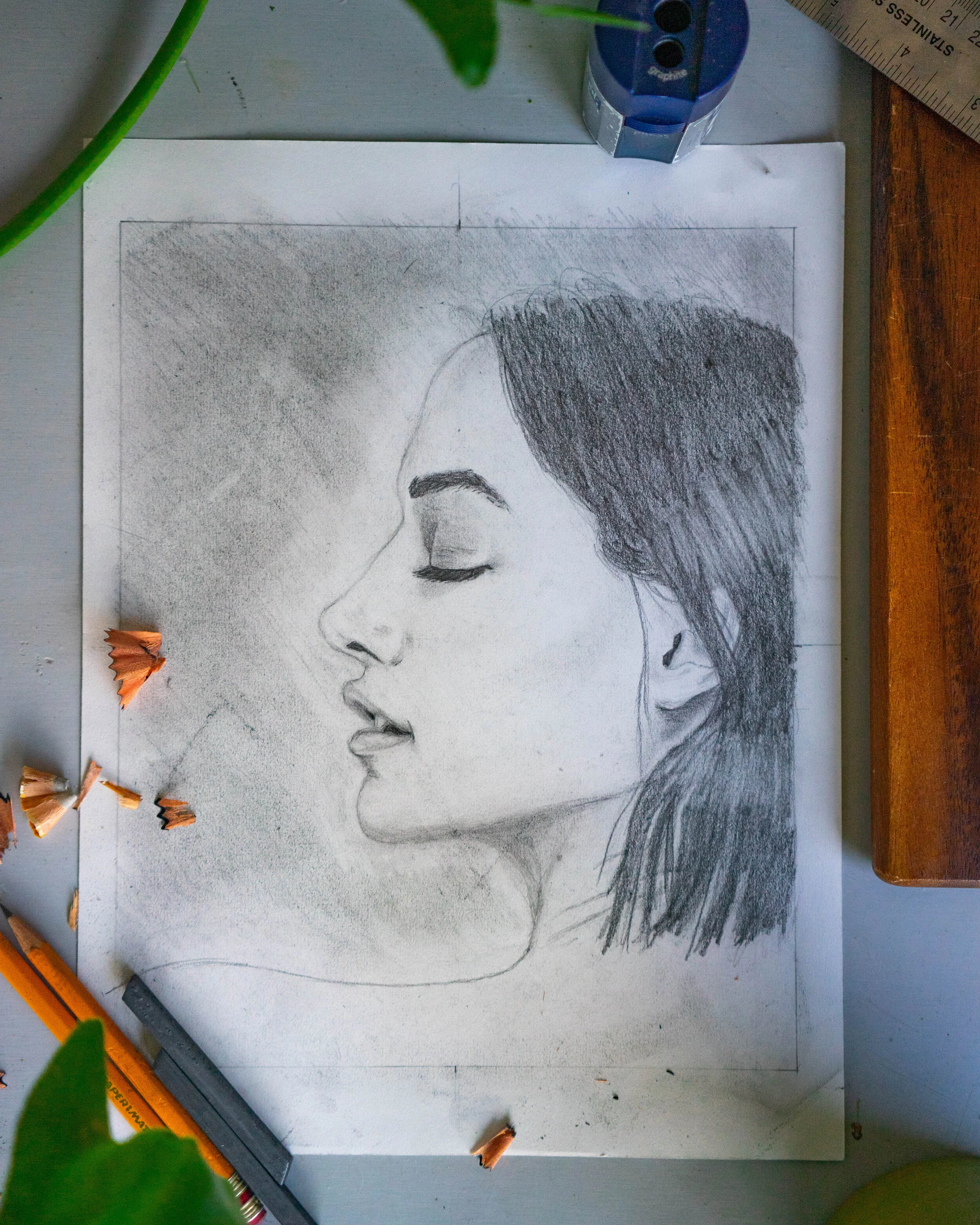
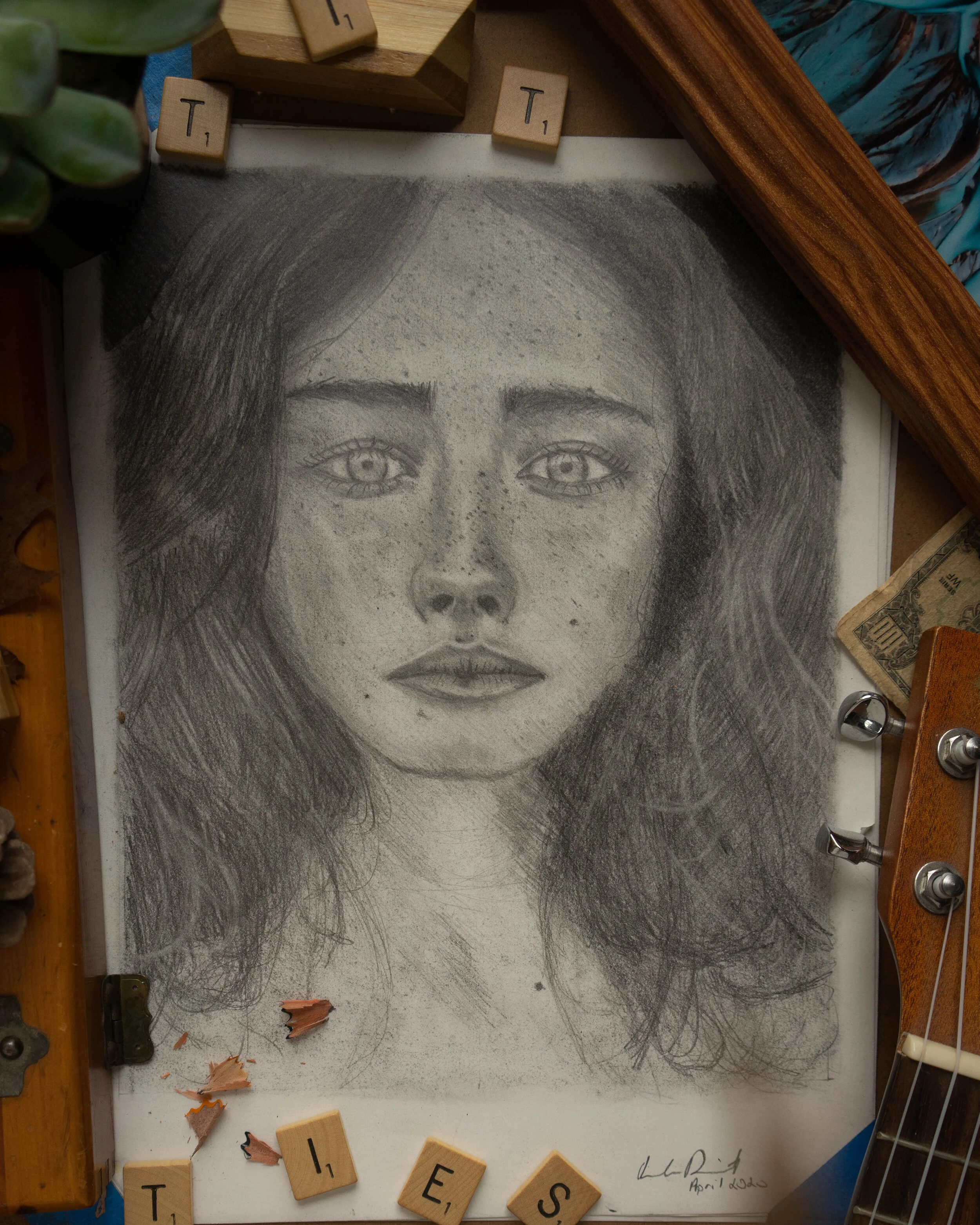
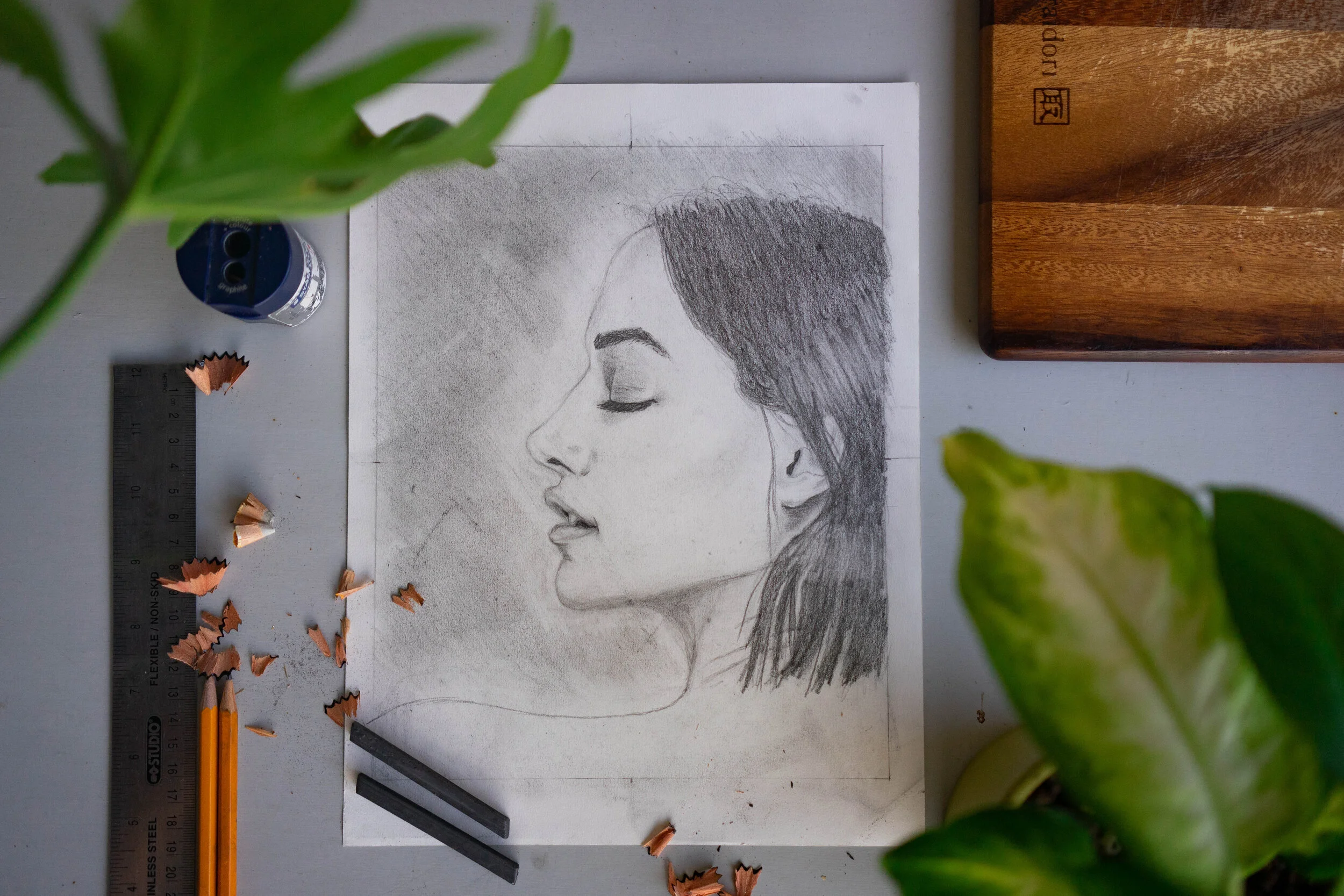
This one was done for fun, a more casual project. Profiles are much easier than straight-on portraits. I love the shading on the eye and ear. My best ear by far.
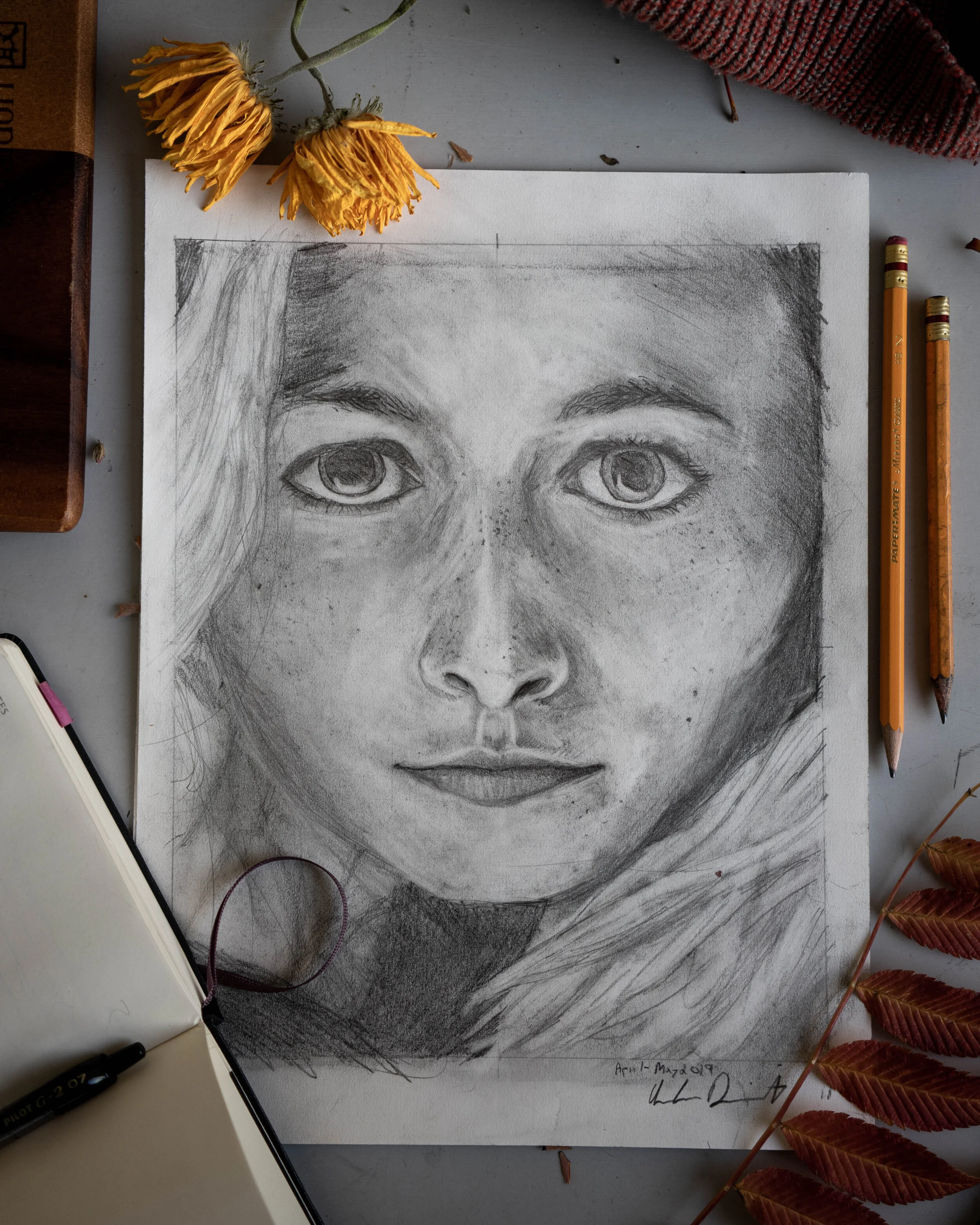
This one was huge, I learned to pay more attention to shading, not just shapes. Notice the upper lip has no hard lines, and how much better it looks!
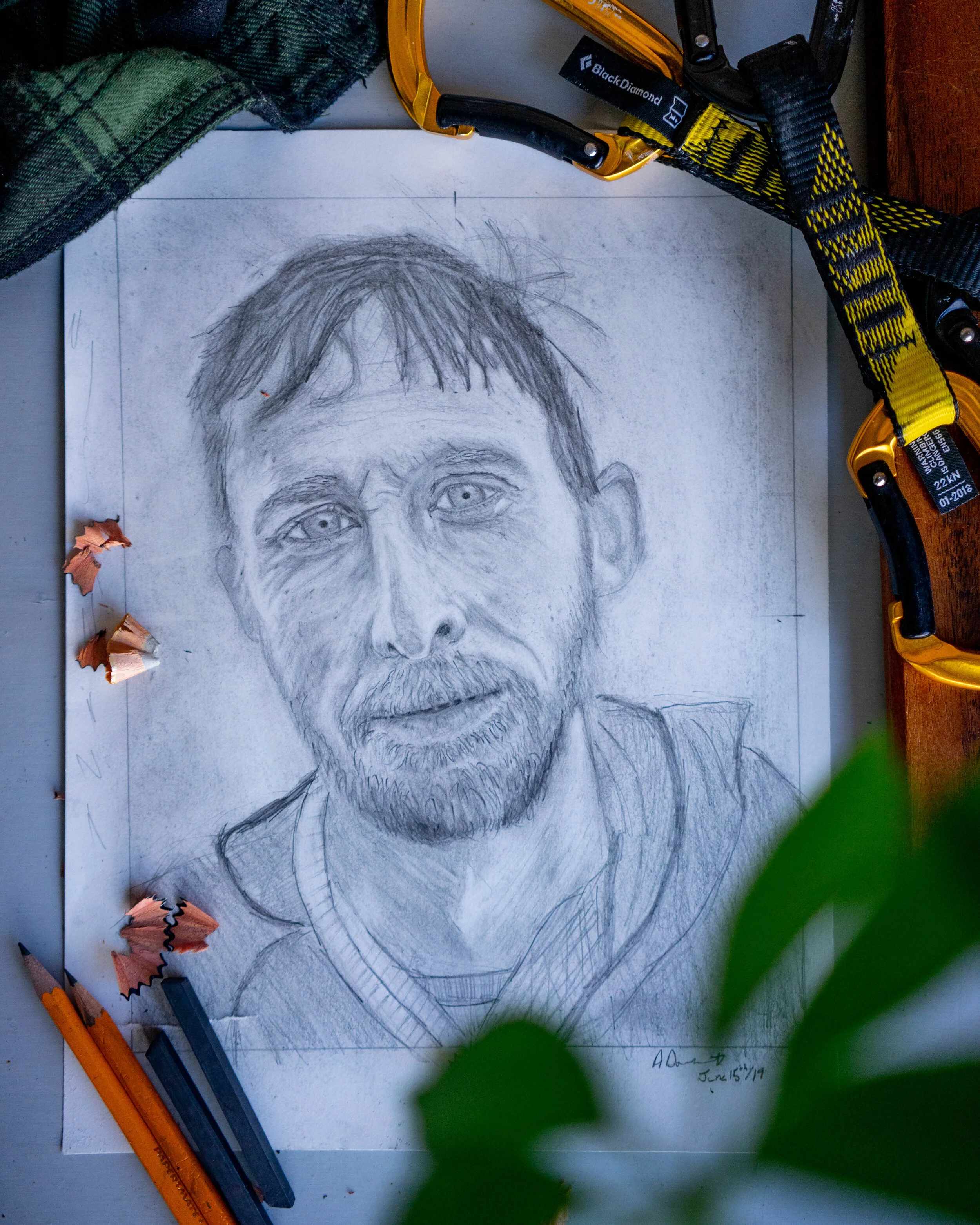
This one was the first where I used a colour reference image, it makes a big difference being able to discern the different values. It's not my best work but hey, practice makes perfect.
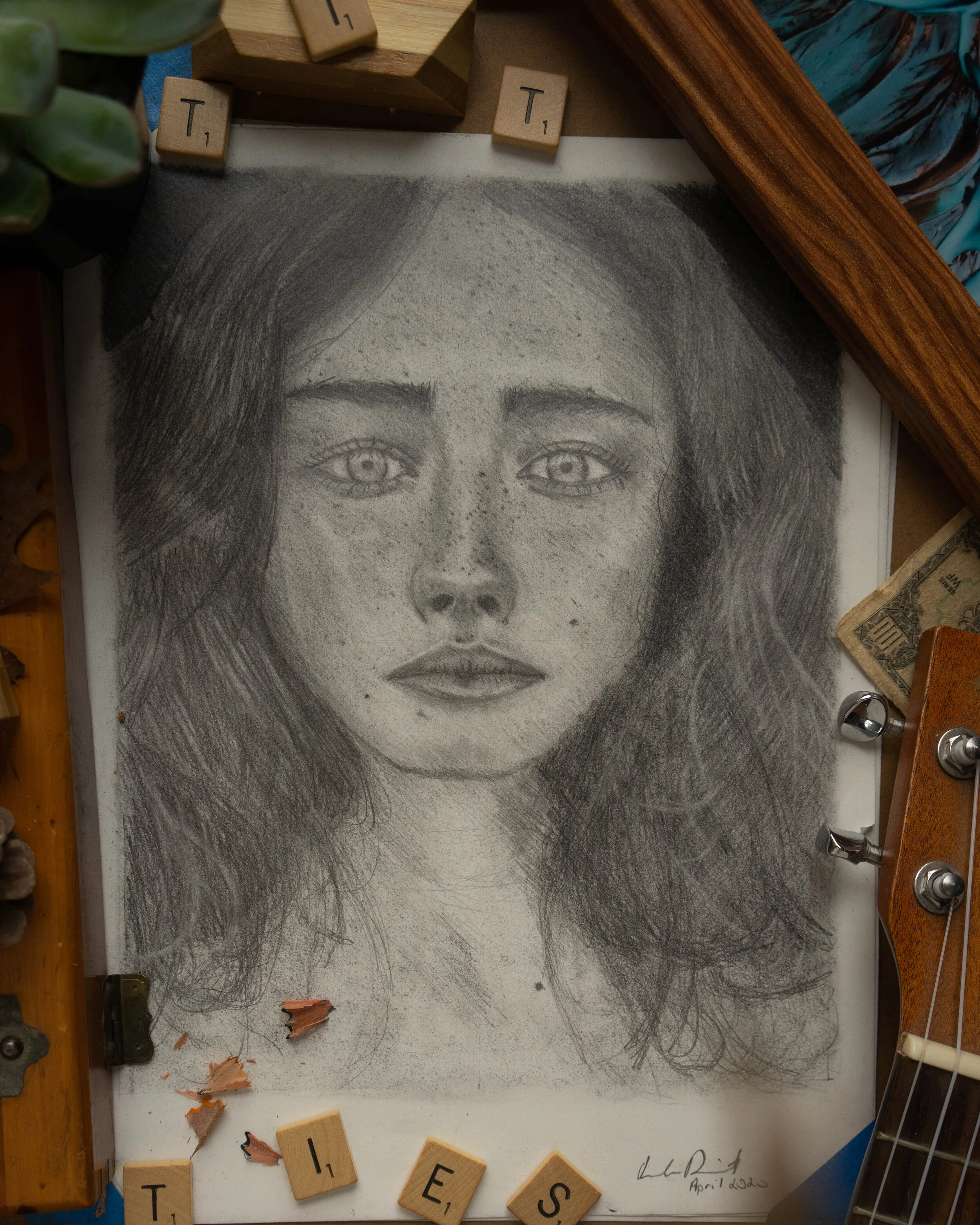
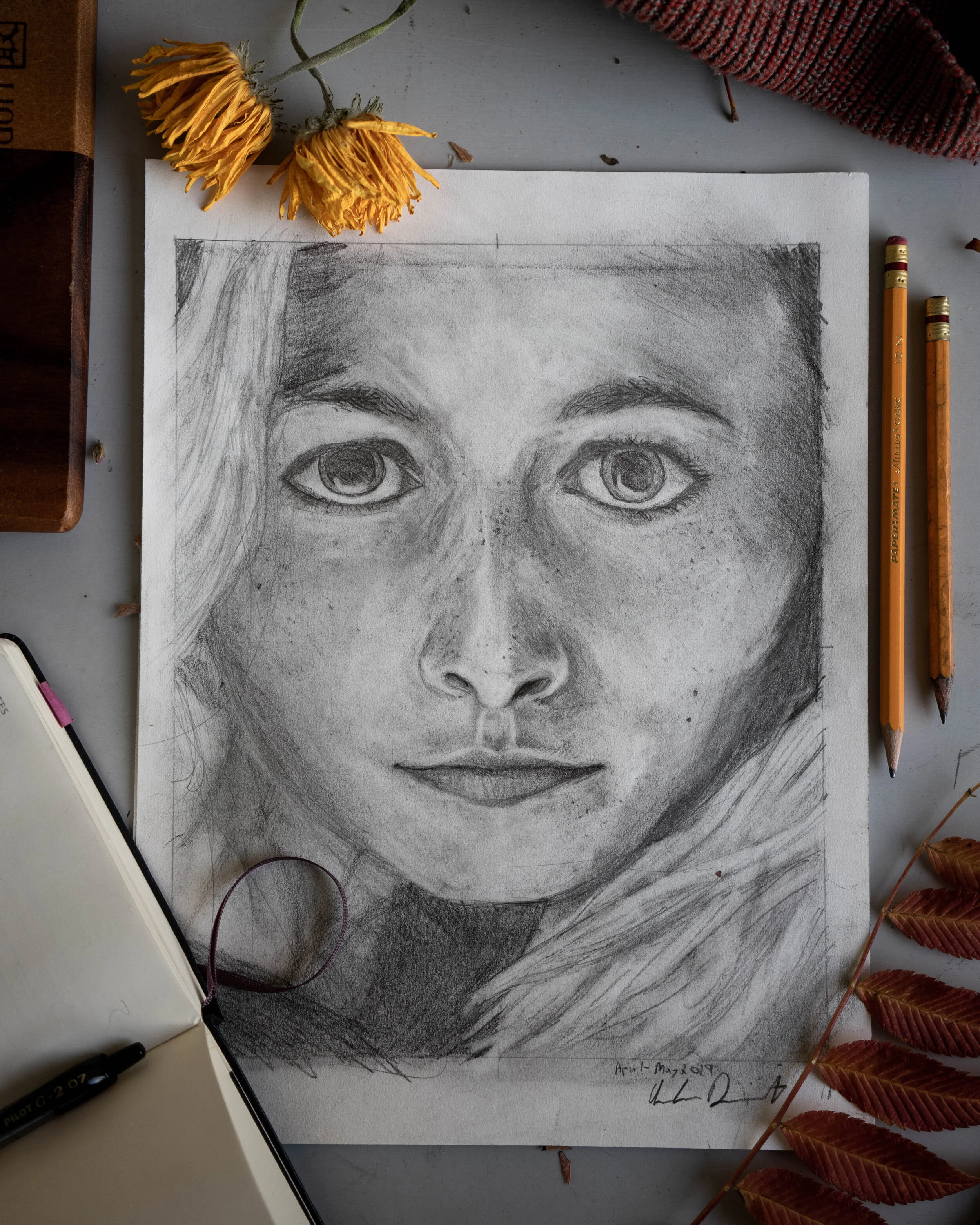
I love this one. I managed to get the eyes almost perfectly symmetrical, and if you notice all the shading is done in the same direction, a small detail but it presented some interesting challenges.
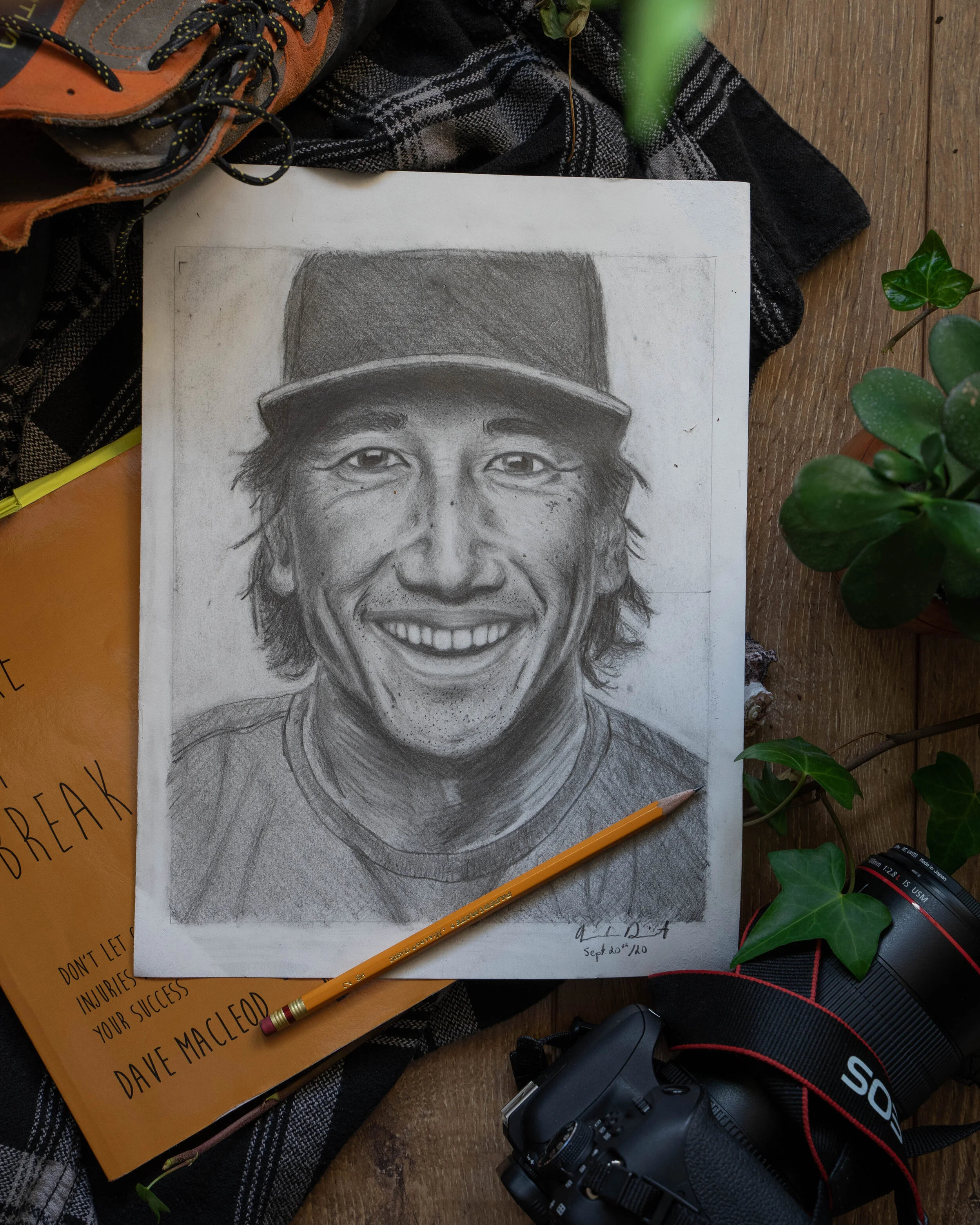
By far my best likeness. Jimmy Chin is an inspirational figure for me, both as an artist and a climber. Note all the details in the texture of the skin and the fact that the eyes actually look like they have life in them.
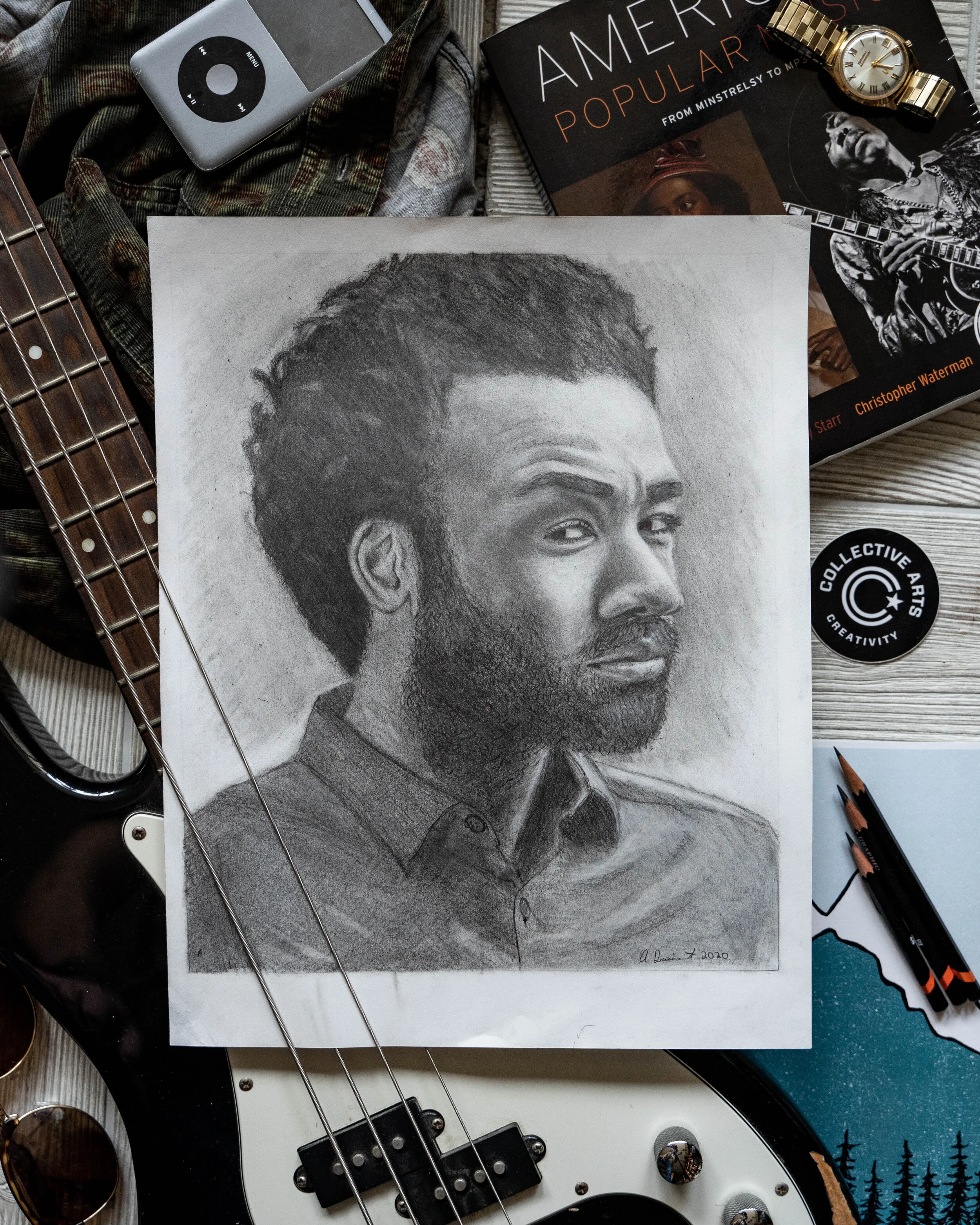
Donald Glover: My most ambitious drawing. This is when I decided to only draw people I find inspiring. 2/3 profiles are notoriously hard to do. all the proportions are wrong. Check out the detail in the cheek shading, the beard and shirt are great.